

· 6 min read
Mediterranean Interior Design: A Modern, Pared-Back Approach
A Mediterranean interior is not blue shutters and anchor cushions. How limewash, terracotta, stone, timber and linen come together in a calm, modern home suited to Fethiye's climate.
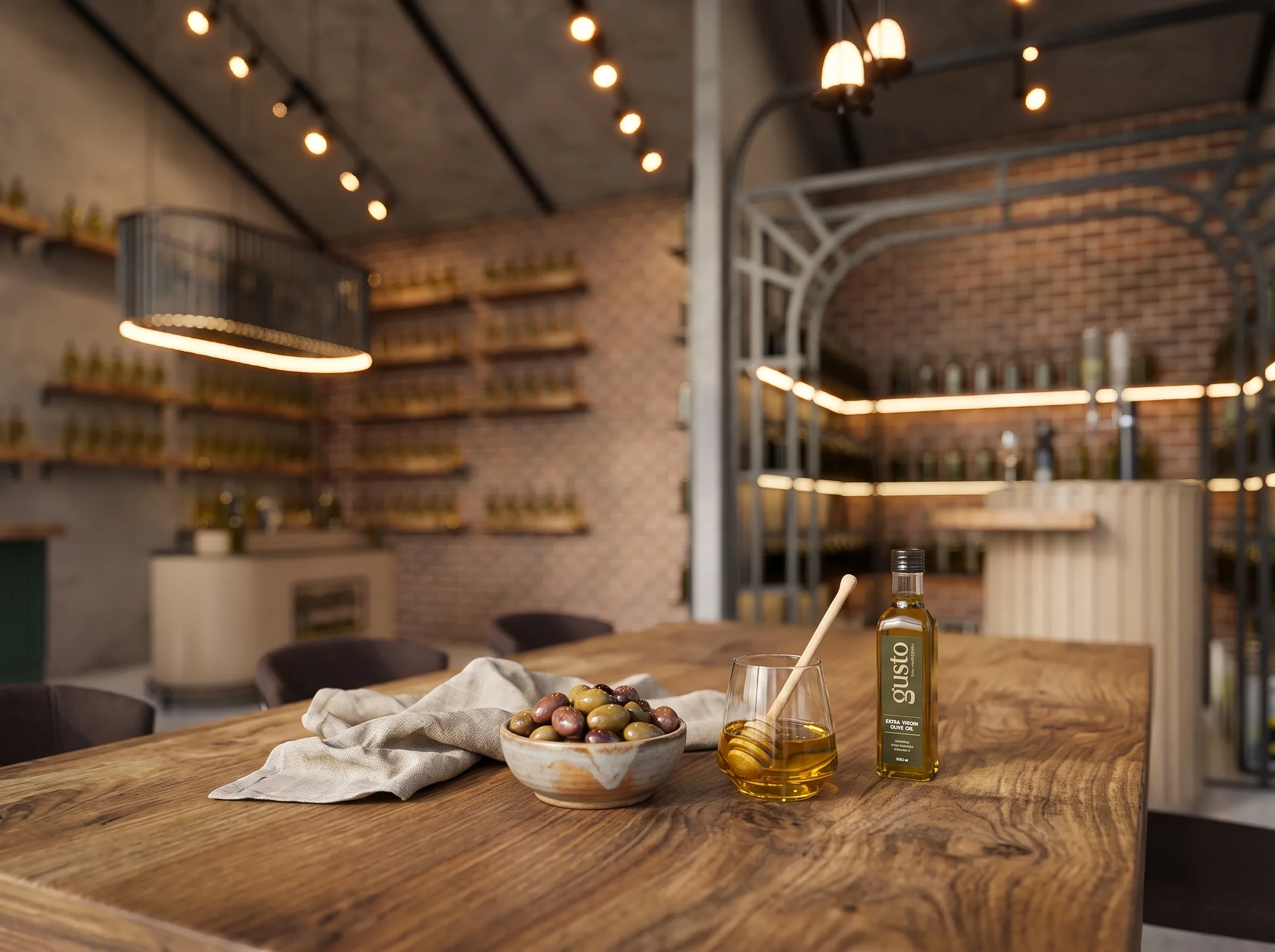
Ask for a "Mediterranean look" and the reference pictures usually come from a Greek island: blue shutters, brilliant white walls, cushions with anchors on them. What makes those rooms work, though, is not the colour scheme. It is the cool shade of a thick wall, light sliding across hand-applied plaster, and materials that feel real when you touch them. From our experience on site, a Mediterranean interior is built with materials and light rather than accessories, and a home in Fethiye, with its strong sun and damp winters, is already a natural fit for it.
1. Where it comes from: an answer to heat, not decoration
From the Aegean islands to southern Italy, the Spanish coast and the villages around Muğla, traditional Mediterranean houses share the same response to climate. Thick walls slow down the daytime heat, small deep-set windows soften the light, and lime, stone and clay were close at hand and easy to repair. Shaded porches and vine-covered terraces were where summer life actually happened. Inside, rooms were cool and slightly dim, with matt, textured surfaces. A modern concrete-framed house has no thick stone walls, but the same effects can be created by other means: shade from eaves and shutters, soft light from matt surfaces, texture from natural materials. Shading and cross-ventilation are covered in our article on designing a cool house in Fethiye.
2. Walls: limewash, texture and broken whites
The walls carry this style. Lime-based paints and plasters give a soft, slightly clouded depth, spread light gently and are vapour-permeable, so walls can dry out during damp winters. Their alkalinity also gives some resistance to mould, though no paint stops mould if the source of moisture is not fixed. A few practical points:
- Lime bonds well to mineral surfaces such as plaster and concrete; over existing acrylic or vinyl emulsion it needs a suitable primer.
- It is less washable than standard paint. Behind the hob, in the entrance hall and at children's height, a protective top coat or a washable matt paint is the sensible choice.
- Instead of pure white, choose broken whites, sand, pale clay or stone tones, which are easier on the eyes in strong sunlight.
- Keep the texture fine and hand-applied; heavily "rustic" plaster gathers dust and looks staged.
3. Floors: terracotta, stone, or tiles that recall them
Terracotta, fired clay tile, is the classic floor here, with its warm colour and irregular handmade edges. It is porous, so it needs sealing, and in a kitchen it can mark with oil. Travertine and limestone work when chosen with a honed, brushed or tumbled matt finish; polished, glossy stone fights the style. Stone is cool in summer and cold in winter, so rugs or underfloor heating make the colder months comfortable. In a holiday let or a busy family home, porcelain tiles with a terracotta or stone look give a similar effect with far less upkeep. Carrying the living room floor tone out onto the terrace, in a non-slip version, makes the house and its shaded outdoor room read as one space. Which materials cope with the local sun, salt and damp is covered in our article on materials for Fethiye's climate.
4. Timber, linen and handmade pieces
Timber balances the coolness of plaster and stone: an oiled or matt-finished table with visible grain, internal shutters, shelves or doors. Fake timber beams stuck onto a concrete ceiling usually look like stage scenery; wood is more convincing where you actually touch it. Linen and cotton are washable, filter the light and stay fresh in humid weather, while shiny synthetics sit badly with this look. A few pieces of handmade ceramics, some woven baskets and a potted olive or rosemary are enough; add more and the room starts to feel like a souvenir shop.
5. Arches, niches and built-in seating, in moderation
In a concrete-framed house an arch does no structural work; it is a design choice. A single arched opening between kitchen and dining area, or a shelf niche in a wall, earns its place; arching every doorway turns the house into a film set. Standard infill walls are rarely thick enough for a deep niche, so we build it into a plasterboard wall brought forward or design it with the joinery, with concealed lighting inside. There is a local precedent worth borrowing, too: the sedir of the traditional Turkish house, a built-in bench running along the wall, topped with cushions. A window seat with drawers underneath gives seating and storage in one.
6. A modern take: fewer materials, no kitsch
Our rules for a calm Mediterranean interior:
- Pick three or four main materials: plaster, stone or terracotta, timber, linen. One metal, black iron or brass, is enough on top.
- Take colour from the landscape: olive green, earth, sage. If you want blue, keep it to a fabric or a single door.
- Leave out anchors, seashells, lifebuoys and artificially distressed furniture.
- Plan warm, indirect light that grazes textured walls; texture only shows when light falls across it.
In a Mediterranean interior, the story is told by light falling on materials, not by accessories.
7. Gusto Ephesus: Mediterranean without the blue and white
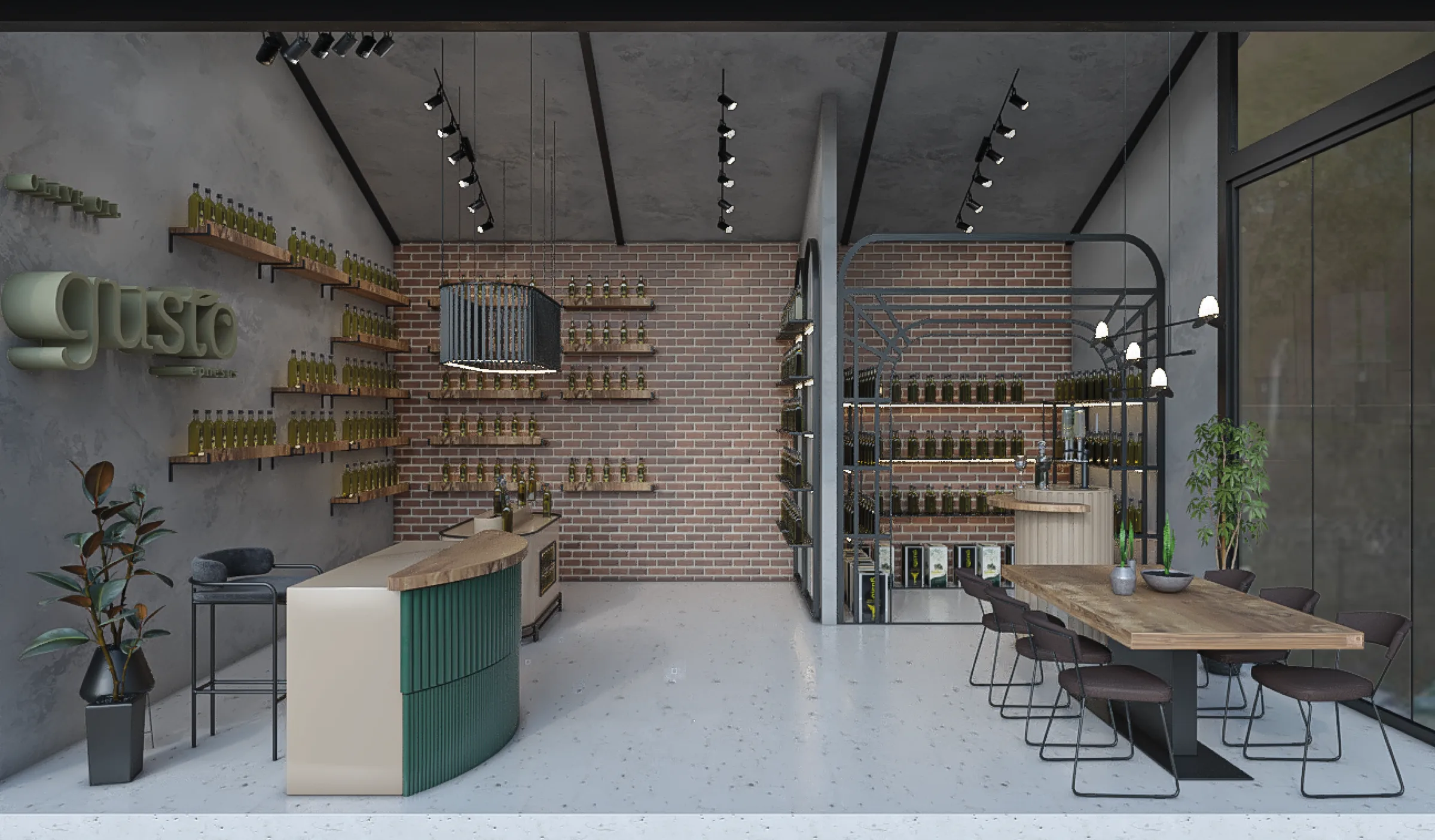
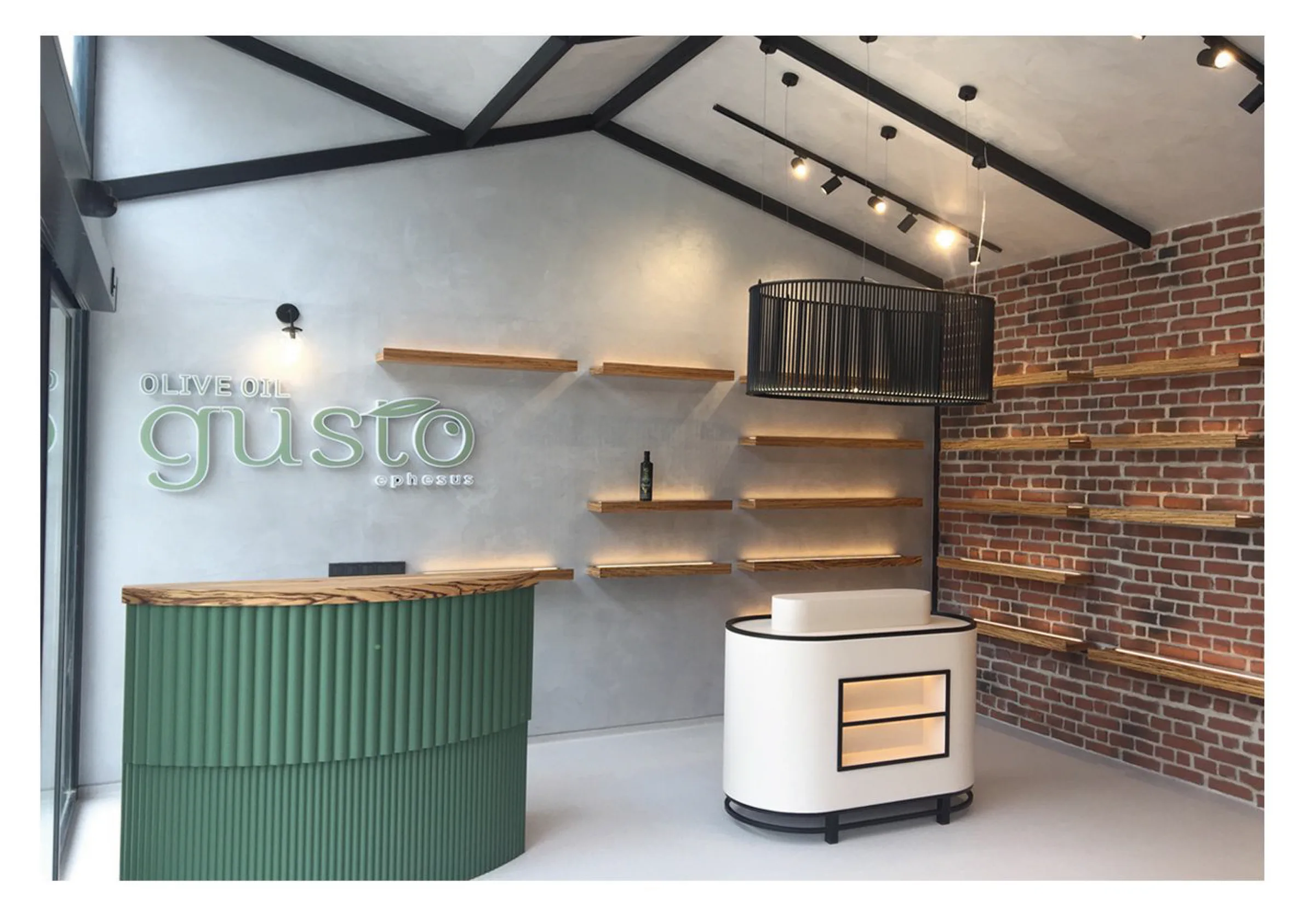
The 40 m² Gusto Ephesus olive oil experience and retail store in Izmir, which we designed and fitted out, shows that the style does not need blue and white. We brought an industrial design language together with Mediterranean warmth: concrete-textured surfaces, natural timber shelving, red brick walls, black steel supports and a green counter that links the space to the olive. Under the high pitched ceiling, the exposed steel structure is balanced by timber and brick, and a wide glazed façade brings in daylight. The palette comes from the materials themselves, and the same thinking works in a home. More in our article on the Gusto Ephesus store and on the project page.
How we handle materials, light and furniture in a single design language is explained on our interior design in Fethiye page.
Frequently asked questions
Can I get this look in a new-build apartment in Çalış or Fethiye centre?
Yes. Even without thick walls or arches, matt lime-based walls, stone- or terracotta-look floors, timber and linen create the style. In a small apartment, keeping to fewer materials and lighter tones matters most.
Is limewash practical in a holiday home that is closed over winter?
Its breathability helps walls dry out, which suits a house that stays shut through the damp months. It does not replace ventilation, though, and in kitchens and bathrooms we pair it with a protective top coat or use a washable matt paint where surfaces are wiped often.
Will stone or terracotta floors be cold in winter?
They feel cool, which is welcome for most of the year in Fethiye. For winter, rugs in living areas and bedrooms, or underfloor heating planned during the renovation, keep the floor comfortable.
If you would like a calm Mediterranean interior suited to the local climate, get in touch; we will choose the materials together using samples and 3D visuals.
- Akdeniz tarzı
- iç mekân tasarımı
- kireç boya
- terakota zemin
- Fethiye
Related service
Interior Design
Let's talk about your project
Your plot, your home or your renovation plan — we map out the way forward in the first meeting.
More articles
· 7 min read
Changing your mind during the build: the effect on cost and programme
Wanting changes once the walls go up is natural; what a change costs depends on the stage and on the work it undoes. Knock-on effects, substitute materials and a written change procedure, explained.
Read more →
· 5 min read
Designing an accessible, age-friendly home in Fethiye
Level access from the car, a plan you can live in on one floor, wider doors, a safe bathroom and good lighting. Planning a Fethiye home you can stay in for decades.
Read more →
· 7 min read
Choosing a Kitchen Worktop: Natural Stone, Quartz or Compact Laminate?
Granite, marble, quartz, porcelain, compact laminate, solid surface or wood: every worktop is strong in one way and sensitive in another. How to choose for the way your kitchen is used.
Read more →