

· 5 min read
Choosing building materials for Fethiye's climate: sea air, sun and upkeep
Salt air, strong sun, hot summers and wet winters wear materials differently. Choices for windows, railings, façades, outdoor floors and textiles that suit Fethiye.
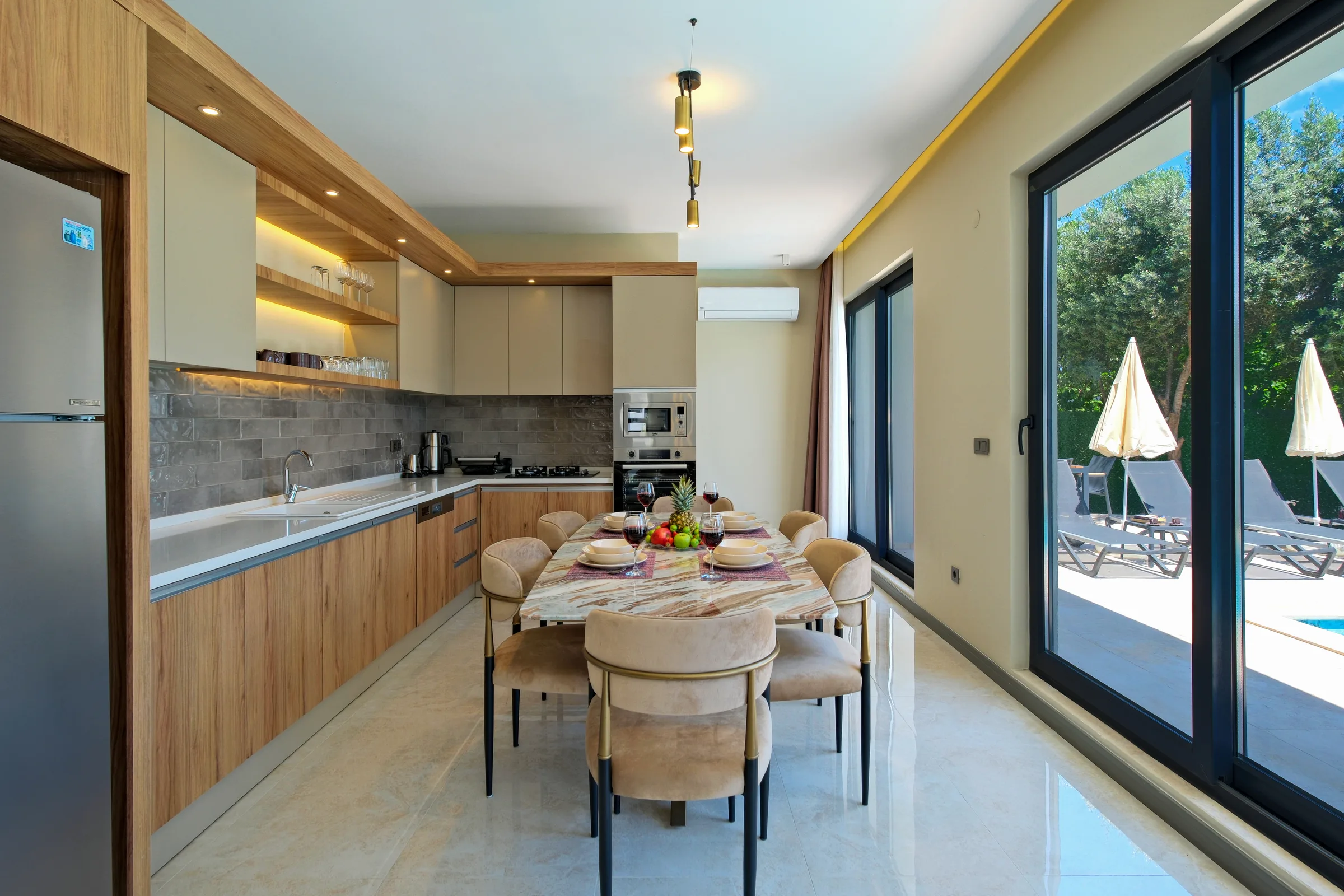
A railing that would last for decades on a house inland can show rust within a few seasons on a villa near the sea in Çalış or Ölüdeniz. Fethiye's climate wears materials in its own way, and if you split your year between Fethiye and another country, you may only notice the damage when you come back. That is why we take the climate into account from the first material decision. Here is what we look at, from our experience on site.
What Fethiye's climate asks of materials
We consider four factors together:
- Humidity and salt air. Near the coast, salt in the air speeds up corrosion of metals and can cause paint and render to blister.
- Strong sun and UV. Summer sun fades colours, makes plastics and some composites brittle, and heats dark surfaces a great deal.
- Hot summers. Heat gain affects comfort and air-conditioning bills directly.
- Mild but wet winters. Heavy, wind-driven rain finds every weak detail, and homes that stay closed for months are at greater risk of damp and mould.
How much each factor matters depends on the distance from the sea, orientation and altitude. A house on the seafront in Çalış and one higher up in Ovacık or Üzümlü may not need the same details.
Windows, railings and fixings
In sea air, metal parts are usually the first to suffer:
- Window and door frames. For aluminium, the surface treatment (anodised or powder-coated) should be of a grade suitable for coastal conditions. For uPVC, a UV-stable profile and colour matter. Timber looks warm but needs regular maintenance.
- Railings. Stainless steel railings should be of a grade suited to marine environments; the wrong grade soon shows brown "tea staining". Fixings for glass balustrades deserve the same care.
- Screws, anchors and brackets. The small parts you do not see are often the first to rust. We want every fixing used outdoors to be corrosion-resistant.
- Mixed metals. Two different metals in direct contact in a damp environment can corrode faster; the detail should separate them.
Façade and paint
In Fethiye, you choose a material for the summers years from now, not just for the day it is installed.
Light colours on the façade reflect more sun and reduce heat load. Dark colours get hotter and fade more visibly under UV. Exterior paint should be breathable and resistant to UV and salt air.
Managing water on the façade matters as much as the material: if window sills, drip edges, parapets and eaves do not throw water clear of the wall, even a good paint will blister. Insulation is not just for winter; it keeps summer heat out too. Eaves, pergolas and shading complete the picture.
Outdoor floors: heat and slip
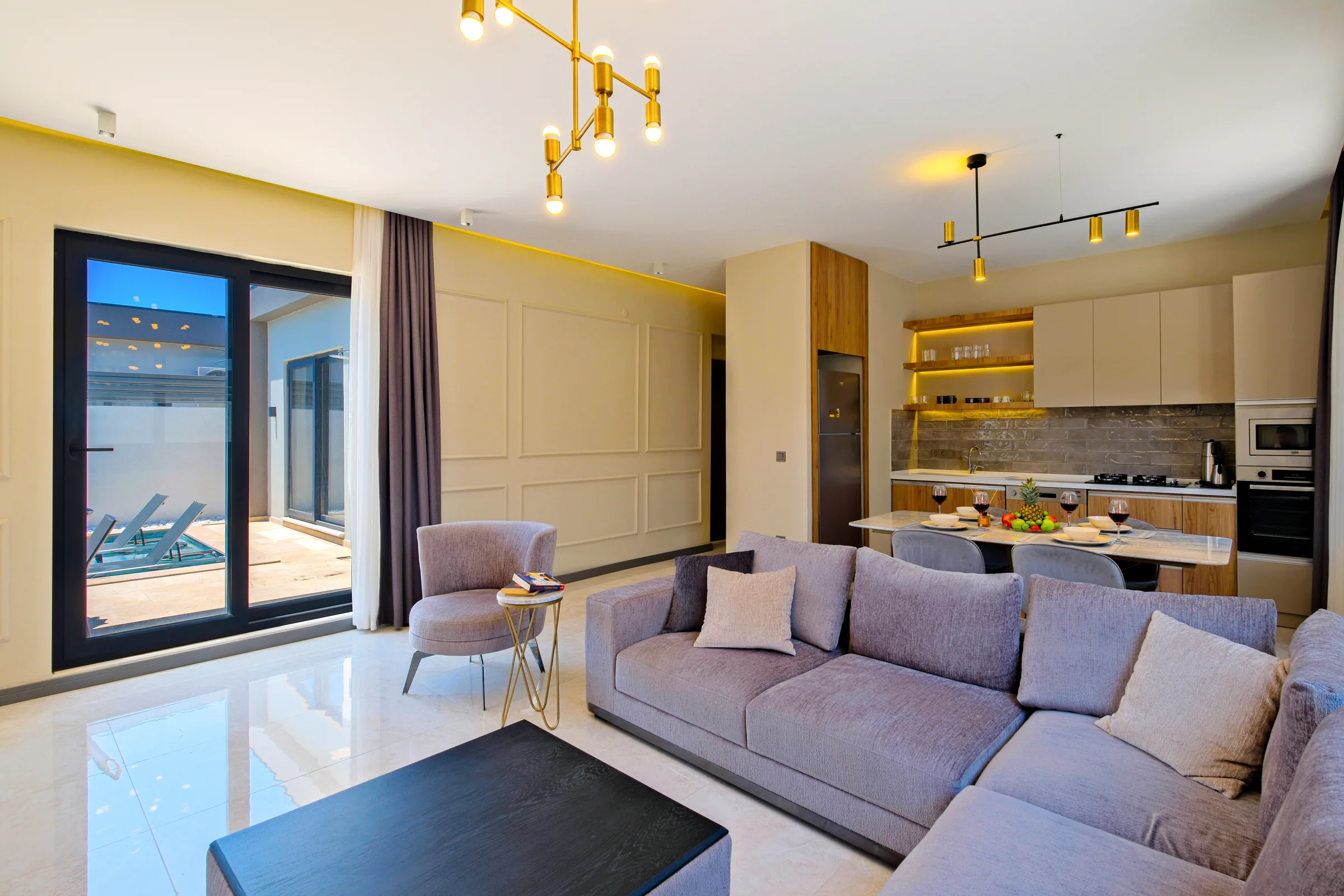
For terraces, pool surrounds and garden paths, we ask two questions: how hot does it get in the sun, and is it slippery when wet?
- Light-coloured natural stone and textured finishes (brushed or sandblasted, for example) stay cooler and reduce slipping.
- Polished and glossy surfaces do not belong outdoors, especially around a pool.
- Timber and wood-effect composite decking feel warm underfoot, but heat build-up and maintenance vary a lot between products, so judge them on a sample left in the sun.
- Outdoor floors always need a fall to shed water, and joints that can cope with heavy rain.
There is more on pool surrounds in our post on planning a villa with a pool.
Wet areas indoors
Fethiye's humidity is hard on bathrooms and kitchens. In wet areas we use moisture-resistant cabinet carcasses, doors with properly sealed edges, water-resistant grout and moisture-resistant ceiling paint. All of this only works with good ventilation; see our bathroom renovation guide for details.
Textiles and interior surfaces
In sunny living rooms, curtains, upholstery and rugs fade over time. UV-resistant fabrics, lined curtains and external shading in front of large south- or west-facing windows reduce this. For outdoor cushions, we choose fabrics that do not hold water, dry quickly and have removable, washable covers. In homes that are shut for part of the year, heavy fabrics and thick rugs that hold moisture raise the risk of mould and musty smells, so it pays to keep them to a minimum.
Choosing with maintenance in mind
No material is maintenance-free; what matters is knowing what the maintenance will be before you choose. We ask:
- How often does this material need care, and what kind?
- Who will do it? Are you in the house all year, or is it empty for long periods while you are abroad?
- Can it be repaired or replaced piece by piece when it wears?
- Is there access for maintenance (scaffold, ladder, service hatch)?
For holiday lets and homes that stand empty for part of the year, choosing materials that need less maintenance usually costs less over time. We write the material grade into the contract line by line, so it is clear from the start what was chosen and why.
Frequently asked questions
What kind of railing should I use on a house near the sea?
Choose stainless steel of a marine-suitable grade, or aluminium with a suitable coastal surface treatment. The fixings should be just as resistant.
Which flooring works for a terrace and pool surround?
Light-coloured, textured finishes that stay relatively cool in the sun and have a high slip-resistance rating. Avoid polished surfaces, and make sure the floor falls to shed water.
My villa already has rust stains and blistering paint. Can this be fixed?
Usually, yes, but the cause has to be found first: the material, a water detail or poor ventilation. Repainting or replacing parts without fixing the cause only postpones the problem.
If you would like to make material decisions for a new build or renovation in Fethiye together, get in touch with us. You can also read about our approach on the villa construction in Fethiye page.
- malzeme seçimi
- villa inşaatı
- iklim
- Fethiye
Related service
Architecture & Construction
Let's talk about your project
Your plot, your home or your renovation plan — we map out the way forward in the first meeting.
More articles
· 7 min read
Changing your mind during the build: the effect on cost and programme
Wanting changes once the walls go up is natural; what a change costs depends on the stage and on the work it undoes. Knock-on effects, substitute materials and a written change procedure, explained.
Read more →
· 5 min read
Designing an accessible, age-friendly home in Fethiye
Level access from the car, a plan you can live in on one floor, wider doors, a safe bathroom and good lighting. Planning a Fethiye home you can stay in for decades.
Read more →
· 7 min read
Choosing a Kitchen Worktop: Natural Stone, Quartz or Compact Laminate?
Granite, marble, quartz, porcelain, compact laminate, solid surface or wood: every worktop is strong in one way and sensitive in another. How to choose for the way your kitchen is used.
Read more →