

· 7 min read
Choosing a Kitchen Worktop: Natural Stone, Quartz or Compact Laminate?
Granite, marble, quartz, porcelain, compact laminate, solid surface or wood: every worktop is strong in one way and sensitive in another. How to choose for the way your kitchen is used.
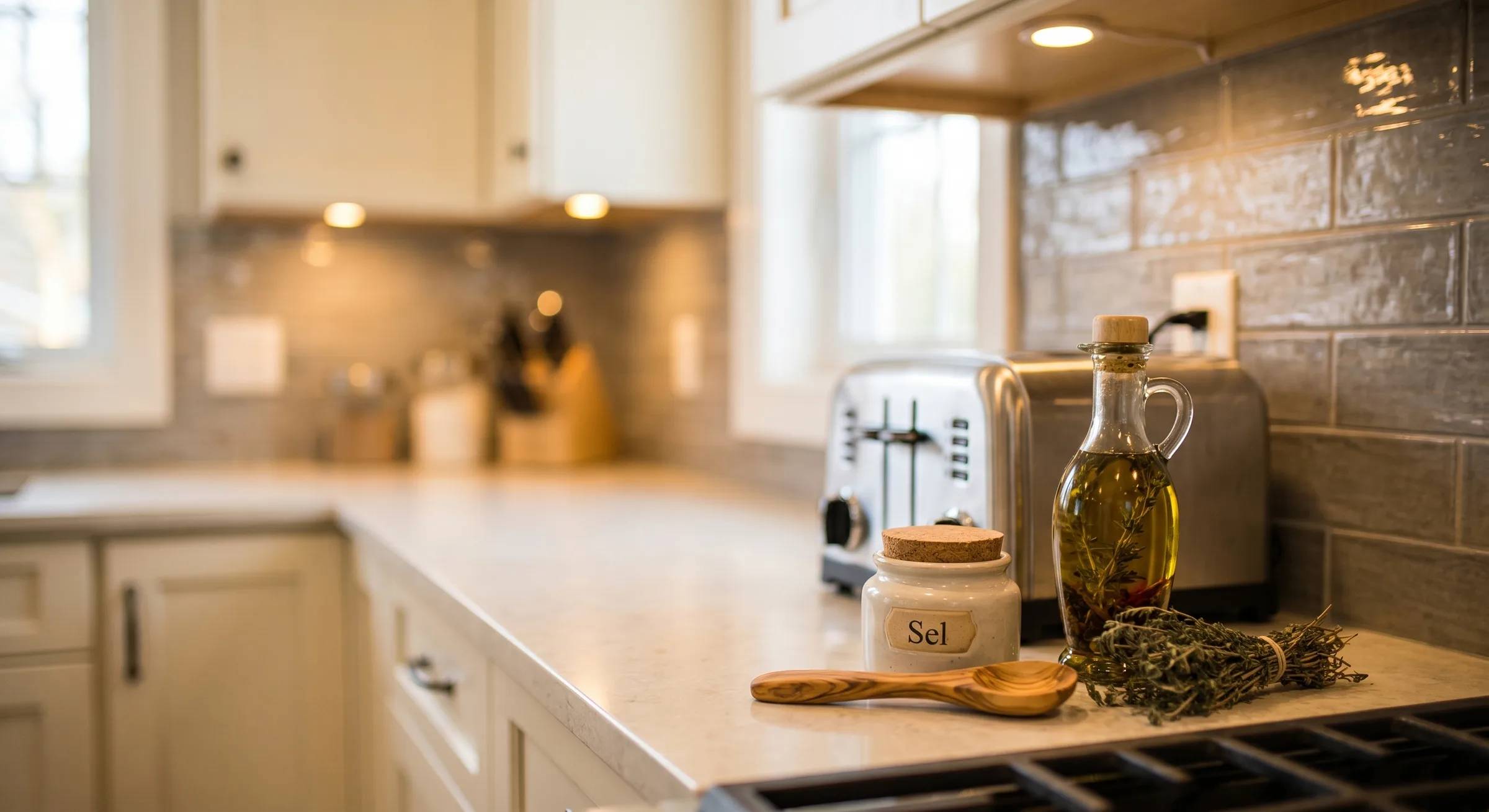
Most people pick a worktop (countertop) by colour and pattern, and only later ask whether it will take a hot pan. In a Fethiye home the order matters even more: a kitchen that is used hard all summer by family or holiday guests, then shut up through a damp winter, needs different qualities from one that is cooked in every day of the year. Every worktop material is strong in one respect and vulnerable in another. Below we compare the main options from our experience on site, through the situations you will actually meet in your kitchen.
1. Start with how the kitchen will be used
Before opening a sample book, we ask:
- Do you cook properly every day, or is the kitchen mostly for breakfast and light meals?
- Do pans go straight from the hob onto the worktop?
- How often do lemons, vinegar, tomato sauce and red wine land on the surface?
- Will the house be let in summer, or closed up for part of the year?
- Will marks that build up over time bother you, and how much care are you happy to give the surface?
The answers narrow the field quickly. In a holiday let, a surface that needs regular care soon looks tired; for an owner who enjoys looking after things, the same surface can improve with age.
2. Natural stone: granite and marble
Every slab of natural stone is different, but granite and marble behave very differently.
Granite is hard, heat-resistant and stands up well to scratching. Porosity varies by type, so some granites need sealing to resist stains. Speckled and darker stones hide everyday marks well.
Marble reacts with acid: lemon juice, vinegar or wine can leave dull etch marks on a polished surface. It is also porous, so oil and coffee can stain it. It needs regular sealing and spills wiped up straight away; a honed (matt) finish shows etching less than a polished one. Marble will mark over time. If you can accept that as character, it is a lovely kitchen surface.
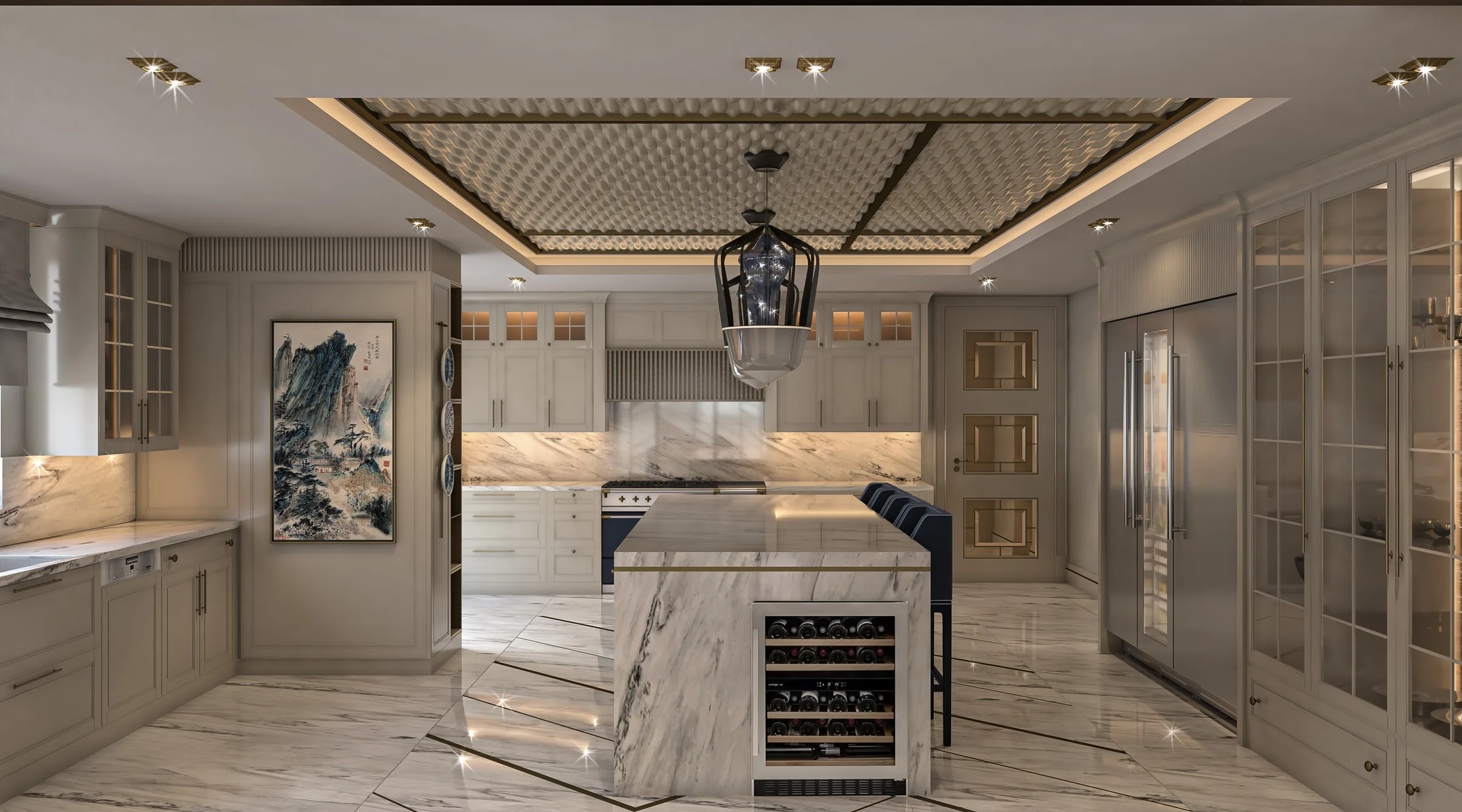
In the Fethiye residential project, a white marble worktop was chosen for the classic-style kitchen, alongside cream lacquered cabinets and brass handles. With a choice like this, we talk through how it will be looked after at the start of the design.
3. Quartz: easy to live with, careful with heat
Engineered quartz is made from crushed quartz bound with resin. Being non-porous, it does not stain and never needs sealing; it resists scratches, and colour is consistent from slab to slab. If you like the look of marble but not the upkeep, marble-pattern quartz is a sensible middle way.
Its weak point is the resin. A pan straight off the hob can discolour or crack it, so trivets have to become a habit. Resin is also affected by UV light, which is why we do not recommend quartz for outdoor kitchens in direct sun.
4. Porcelain and sintered stone
Large-format porcelain and sintered stone slabs are thin surfaces made under high heat and pressure. They resist heat, stains, scratches and sunlight, and do not absorb water, which makes them strong candidates both indoors and on a terrace. Points to watch:
- Edges: the face is very hard, but edges and corners can chip under a sharp knock. A slightly rounded or chamfered edge reduces the risk.
- Pattern through the body: on some products the pattern is only on the surface, and a cut edge shows a different colour. For a thick, solid look, the edge is built up with a mitred strip cut from the same slab.
- Fabrication and use: sink and hob cut-outs need an experienced fabricator. Cutting directly on the surface will blunt your knives; use a board.
5. Compact laminate, solid surface and wood
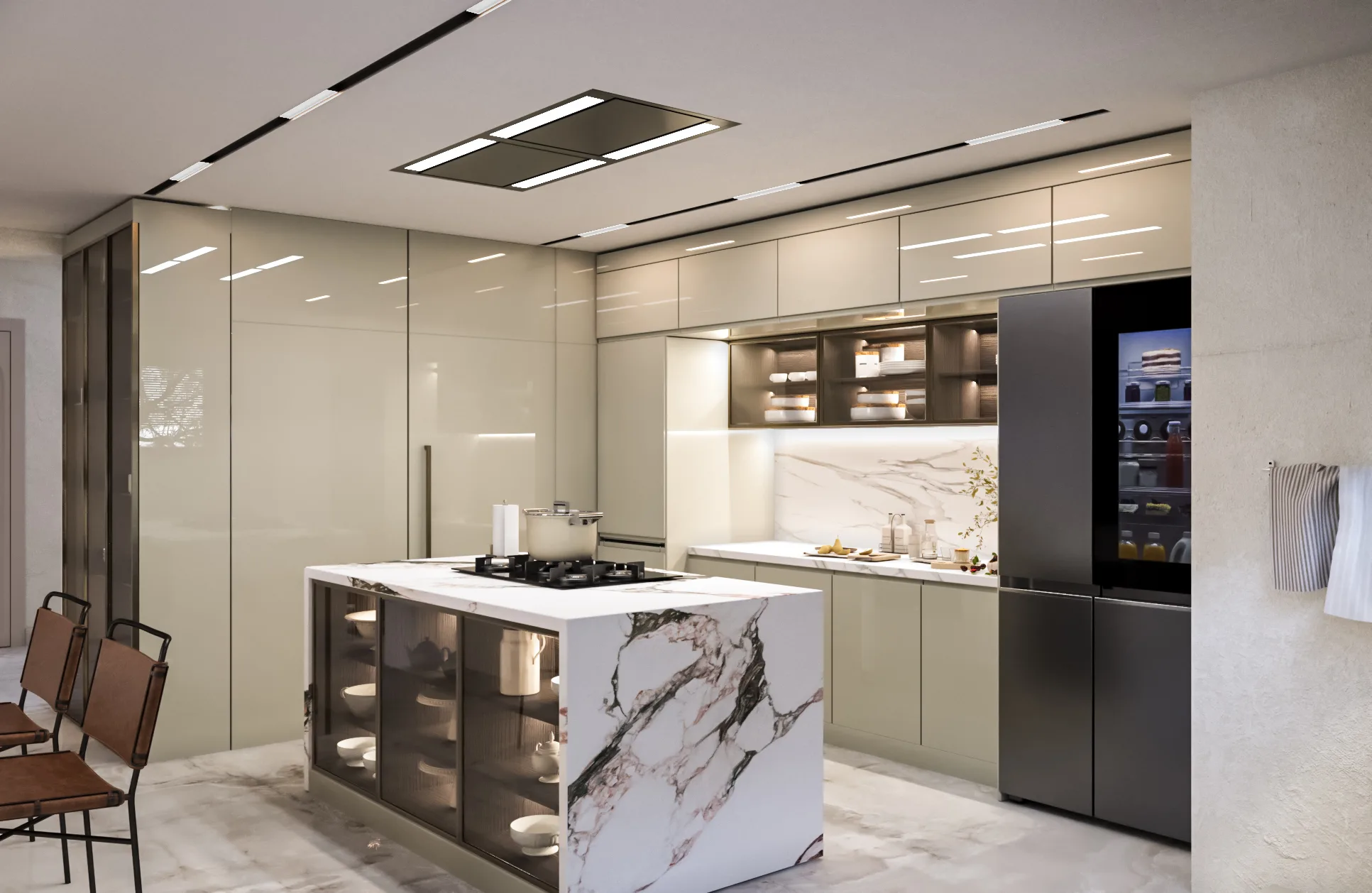
Compact laminate is a thin, dense board that is water-resistant right through. That makes it suitable for undermounted sinks and drainer grooves cut into the worktop; the core shows as a fine line along the edge. Protect it from very hot pans and from cutting directly on it. Do not confuse it with standard laminate on chipboard, which can swell where water gets in at joints and around the sink.
Solid surface (acrylic-based composite) can be joined without visible seams and formed with an integrated sink, and light scratches can be sanded out. It is less resistant to heat and scratching than stone.
Solid wood brings warmth, but needs regular oiling, can darken around a wet sink area and moves with humidity, especially in a house closed through a damp winter. We usually suggest wood for dry zones, such as the breakfast end of an island.
6. The details that decide looks and lifespan
- Joints: if a long run or an L-shaped corner needs a joint, place it away from the sink and hob, where the eye does not fall.
- Edge and thickness: a slim profile looks light and modern, a thick edge more classic; a sharp arris is vulnerable, a slightly eased edge lasts longer.
- Slab selection: with natural stone, see the actual slab if you can and plan the vein direction before cutting.
- Sink mounting: an undermounted sink lets you wipe straight into it, but the cut edge must be water-resistant.
- Templating: the worktop is measured on site once the units are fitted and levelled; walls are rarely perfectly square.
How we plan the worktop with cabinets and services in one work programme is in our kitchen renovation guide; the cabinet side is in our article on bespoke furniture.
Every worktop material involves a compromise; choosing well means knowing which one you can live with.
7. Terrace and outdoor kitchens: sun and salt
In Fethiye the kitchen often continues onto the terrace: a barbecue, an outdoor sink, a bar counter. Here sun, winter rain and sea air all work on the surface together. Resin-based surfaces can discolour in direct sun, and porous stone can stain and weather with salt and moisture. Outdoors we generally recommend porcelain or sintered stone, or a dense, well-sealed granite. The units, hinges and fixings underneath also need to suit outdoor conditions. More on this in our article on materials for Fethiye's climate.
How we treat the worktop as part of the whole kitchen design is explained on our interior design in Fethiye page.
Frequently asked questions
Is marble a bad idea in a holiday-home kitchen?
Not necessarily, but it will etch where acids touch it and develop a patina over time. Sealing, wiping spills quickly and a honed finish reduce the effect; in a busy holiday let, quartz or porcelain is usually less work.
Which worktop works in an outdoor kitchen?
Porcelain or sintered stone handles sun, heat and rain well, and a dense, sealed granite is another option. We do not recommend resin-based quartz in direct sun.
Does a house closed for the winter affect the worktop?
Non-porous surfaces such as porcelain, quartz and compact laminate are largely unaffected by a damp, closed house. Solid wood can move and porous stone should be kept sealed; ventilating the house when you can also helps.
Can I replace just the worktop and keep my kitchen units?
Often, yes, if the carcasses are sound and level. If you are moving to a heavier material, we check that the units can carry it and plan the sink and hob connections at the same time.
If you are choosing a worktop or planning a new kitchen, get in touch and we will go through the options with samples and 3D visuals.
- mutfak tezgâhı
- kuvars tezgâh
- mermer tezgâh
- mutfak tasarımı
- Fethiye
Related service
Interior Design
Let's talk about your project
Your plot, your home or your renovation plan — we map out the way forward in the first meeting.
More articles

· 7 min read
Changing your mind during the build: the effect on cost and programme
Wanting changes once the walls go up is natural; what a change costs depends on the stage and on the work it undoes. Knock-on effects, substitute materials and a written change procedure, explained.
Read more →
· 5 min read
Designing an accessible, age-friendly home in Fethiye
Level access from the car, a plan you can live in on one floor, wider doors, a safe bathroom and good lighting. Planning a Fethiye home you can stay in for decades.
Read more →
· 5 min read
How to reduce the cost of building a house without cutting quality
Lowering cost is not the same as building cheap. How size, massing, structure, the plot and the timing of decisions drive cost, where to save sensibly and where never to.
Read more →