

· 6 min read
Designing a Child-Safe Home: Stairs, Glass, Pool and Sockets
Child safety is less about plastic locks added later and more about design decisions. What to get right on stairs, windows, glass, electrics, kitchen, bathroom and pool in a Fethiye home.
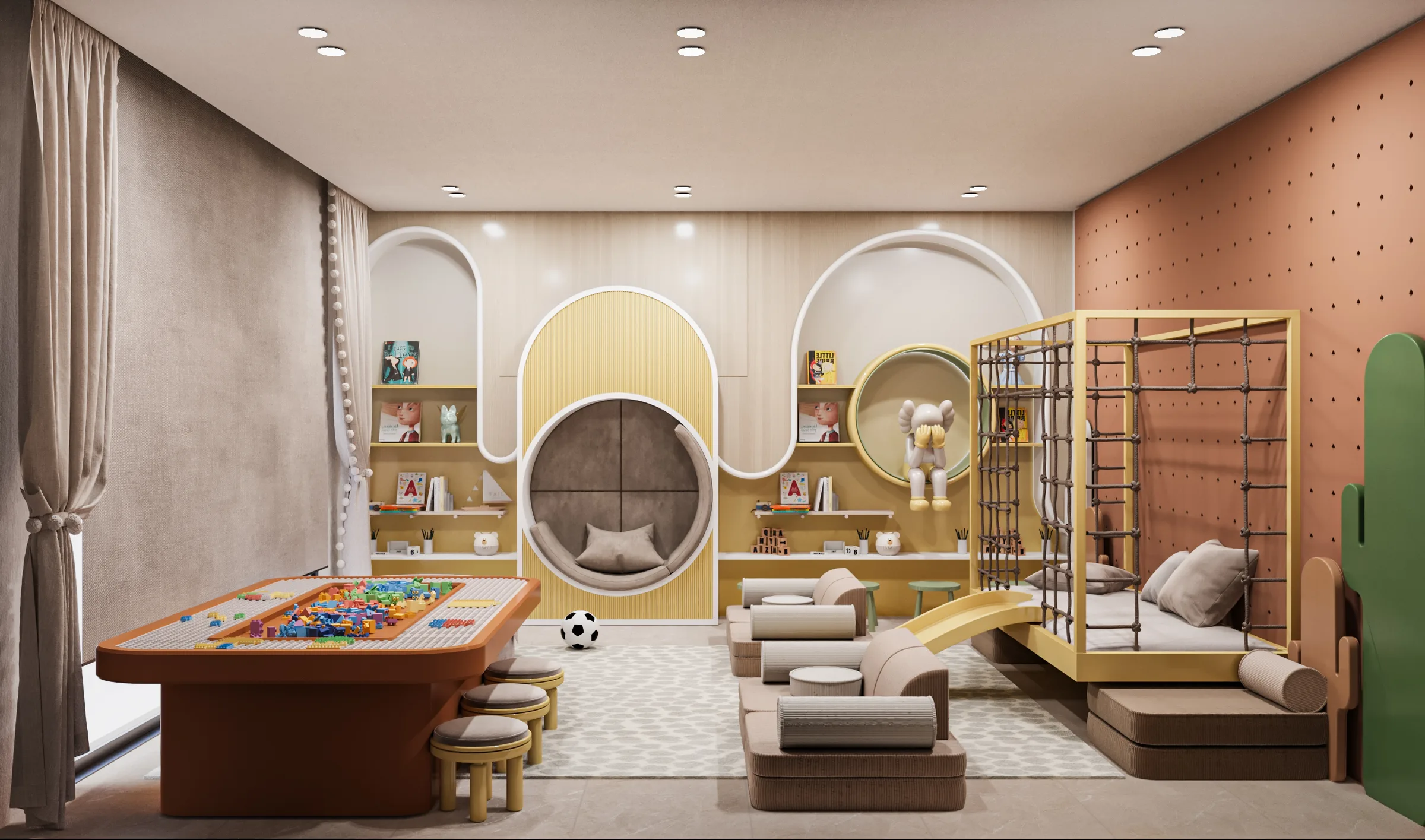
The week a baby starts crawling, the house changes overnight: low sockets, the corner of the coffee table, the bottom step of the stairs, a balcony door left open. Most families reach for corner guards and plastic catches at that point. From our experience on site, lasting safety comes mainly from decisions made during design and construction; add-on gadgets only complete them. No layout replaces supervision, but a house that is set up properly softens the consequences of a moment's distraction. This matters even more in a holiday villa, where grandchildren, visiting families or rental guests arrive with toddlers who don't know the house. Safety in the children's bedroom itself is covered in our article on children's room design; here we look at the rest of the home.
1. Stairs: balustrades, treads and gates
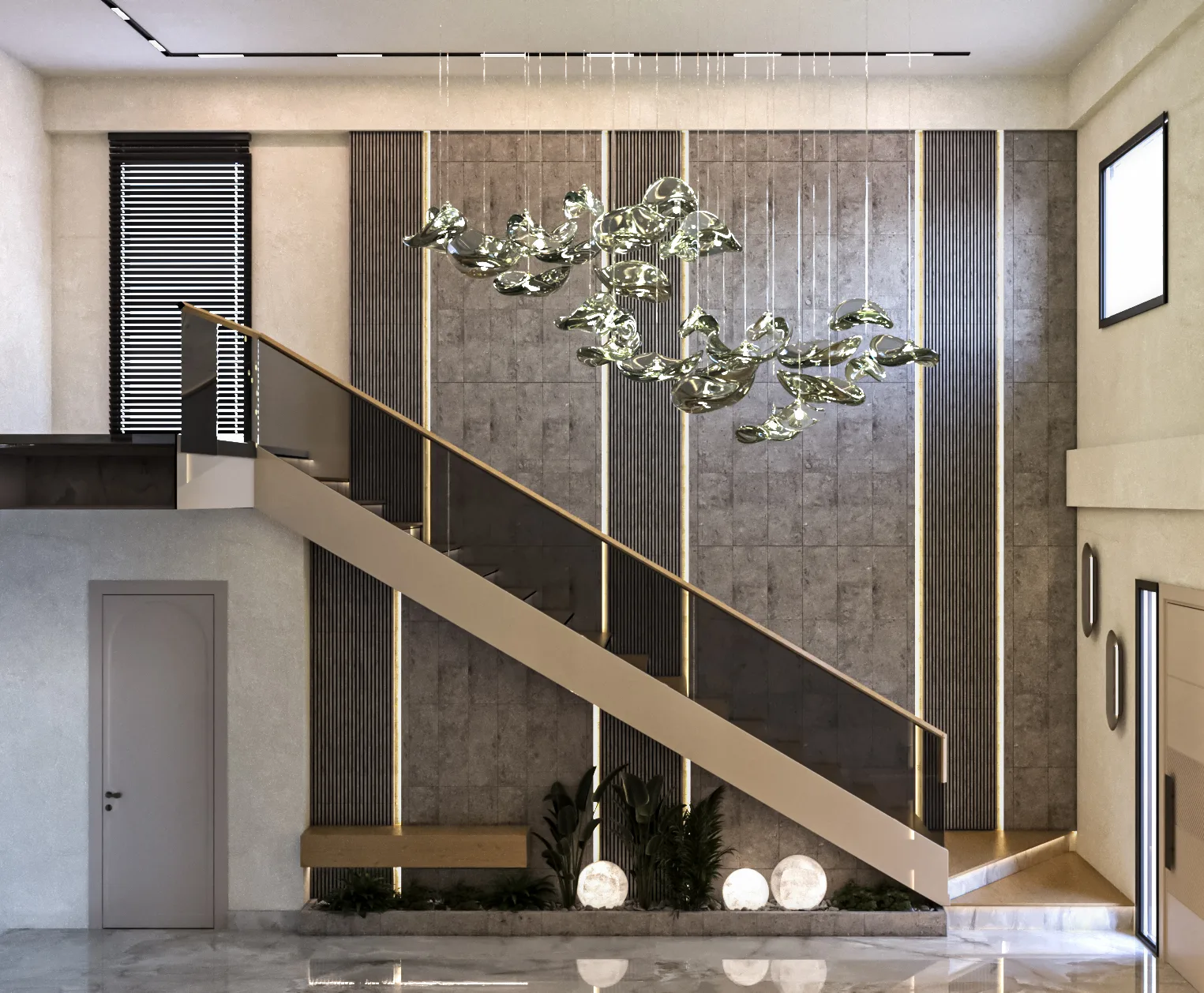
Most of the precautions on a staircase are decided when it is drawn:
- Balusters should be vertical, with gaps narrow enough that a small child's head cannot pass through; the dimension is set by the regulations and the project.
- Horizontal rails turn a balustrade into a ladder. Open-riser stairs, with gaps between the treads, can trap a leg or a small body; those gaps can be closed.
- The triangular gaps between the bottom of the balustrade and the treads, and any gaps along the edge of a galleried landing, are checked too.
- At the top of the stairs, use a gate screwed to the wall or balustrade; pressure-fit gates are not suitable there. A solid wall or a timber pad for the screws is allowed for in the design.
The other stair decisions are covered in our article on staircase design.
2. Windows, balconies and galleries
- On upper floors, fit lockable handles or restrictors that limit how far the window opens. On tilt-and-turn windows, the tilt position gives enough ventilation and only an adult opens the sash fully.
- An insect screen is not a barrier; it will not hold a child's weight.
- Don't put climbable furniture, planters or storage boxes under windows or next to balcony balustrades.
- Balcony and gallery balustrade heights are set by the regulations and the project, and a balustrade that cannot be climbed matters as much as its height.
- On sliding glass doors to terraces, add a second lock out of a child's reach.
3. Glass and furniture: impacts and tip-overs
Use safety glass in low-level glazing, glass doors, shower screens and glass balustrades. Toughened glass breaks into small, blunt pieces; laminated glass stays bonded to its interlayer when broken, which is why it is used for balustrades. Marking large glass panels with a band or pattern at a child's eye level as well as an adult's helps prevent people walking into them, and safety film can be applied to existing glass.
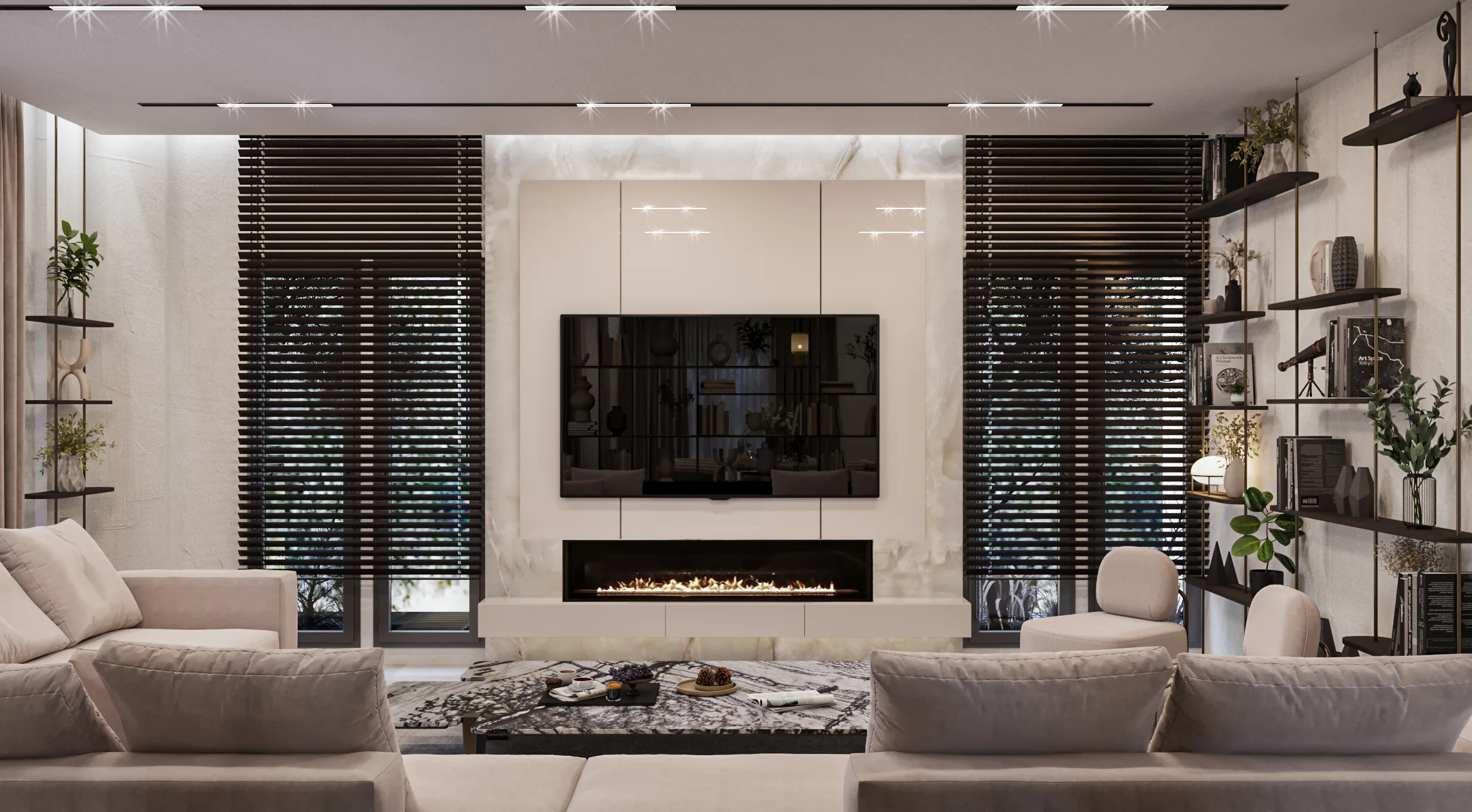
Bookcases, display cabinets, chests of drawers and TVs are fixed to the wall; a child using drawers as steps can pull an unfixed unit over. Fethiye is in an earthquake zone, so this protects everyone in the house. Plasterboard walls get internal reinforcement where fixings will go.
4. Electrics: RCD protection and socket planning
- A residual current device (RCD; kaçak akım rölesi in Turkish) in the consumer unit is one of the basic protections against electric shock. If there isn't one, or its test button doesn't work, have a licensed electrician check it.
- Child-protected sockets have internal shutters that open only when both pins are pushed in together. Plastic plugs added later get lost and are a small-parts hazard.
- Enough sockets means fewer extension leads; we place TV and charging points behind furniture or above a child's reach.
- Bathroom sockets stay well away from water, garden and terrace sockets have covers rated for outdoor use, and the consumer unit sits high with a lockable cover.
5. Kitchen and bathroom: heat, water and chemicals
An oven built into a tall unit at eye level keeps the hot door out of a child's reach; if it sits under the worktop, choose a multi-glazed door that stays cooler outside. A control lock on the hob, and keeping pan handles from sticking out over the edge of an island hob, both matter. For dishwasher pods, detergents, medicines and cleaning products, we plan a high, lockable cupboard from the start instead of the cupboard under the sink. Bathrooms need flooring that is not slippery when wet and a thermostatic shower: it keeps the water temperature steady, and its safety button stops the water going above a set temperature.
In child safety, the most effective measure is not a lock added later but a detail drawn from the start.
6. The pool: fence, gate, alarm and cover
In a villa with a pool, the pool is the most serious child-safety issue. We think in layers:
- Fence: it separates the pool from the garden and from the house. If a door opens straight from the house onto the pool area, the fence loses its purpose. It should have no horizontal rails to climb, and chairs and planters are kept away from it.
- Gate: self-closing and self-latching, with the latch out of a child's reach.
- Alarm and cover: extra layers. A bubble-type solar cover is not a safety cover; a child can slip underneath it.
- Sightlines: the pool should be visible from the main living spaces.
In a rental villa, these layers protect guests' children too. We confirm current pool rules with the municipality and for each project; other pool decisions are covered in our article on planning a villa with a pool.
7. Permanent and temporary measures
Balustrades, glass type, the consumer unit and sockets, fixing points and the pool fence are permanent and are solved during construction or renovation. Stair gates, window restrictors, hob locks and corner guards are temporary. We plan where they will be screwed so they can be removed without trace when the children grow up, rather than leaving patched holes in the walls.
How we handle safety details in the same project as furniture, lighting and materials is explained on our interior design in Fethiye page.
Frequently asked questions
What can be done in an existing villa?
Window locks and restrictors, screw-fixed stair gates, fixing furniture to walls, child-protected sockets, safety film on glass and swapping surface-mounted shower mixers for thermostatic ones usually need no demolition. Ask a licensed electrician to check whether the consumer unit has RCD protection.
We let our villa to families. What should be in place?
At a minimum: a fenced pool with a self-closing gate, restrictors on upper-floor windows, furniture fixed to the walls, safety glass where people might fall against it, and stair gates available on request. Clear written information for guests about the pool gate and balcony doors helps too.
Does a pool cover or alarm replace a fence?
No. Fence, self-closing gate, safety cover and alarm are layers that complement each other; none of them is enough on its own, or without supervision.
If you would like to plan a home for a young family from the start, or review an existing one, get in touch; we will walk through the house with you and set priorities together.
- çocuk güvenliği
- güvenli ev
- merdiven korkuluğu
- havuz güvenliği
- Fethiye iç mimari
Related service
Interior Design
Let's talk about your project
Your plot, your home or your renovation plan — we map out the way forward in the first meeting.
More articles

· 7 min read
Changing your mind during the build: the effect on cost and programme
Wanting changes once the walls go up is natural; what a change costs depends on the stage and on the work it undoes. Knock-on effects, substitute materials and a written change procedure, explained.
Read more →
· 5 min read
Designing an accessible, age-friendly home in Fethiye
Level access from the car, a plan you can live in on one floor, wider doors, a safe bathroom and good lighting. Planning a Fethiye home you can stay in for decades.
Read more →
· 7 min read
Choosing a Kitchen Worktop: Natural Stone, Quartz or Compact Laminate?
Granite, marble, quartz, porcelain, compact laminate, solid surface or wood: every worktop is strong in one way and sensitive in another. How to choose for the way your kitchen is used.
Read more →